
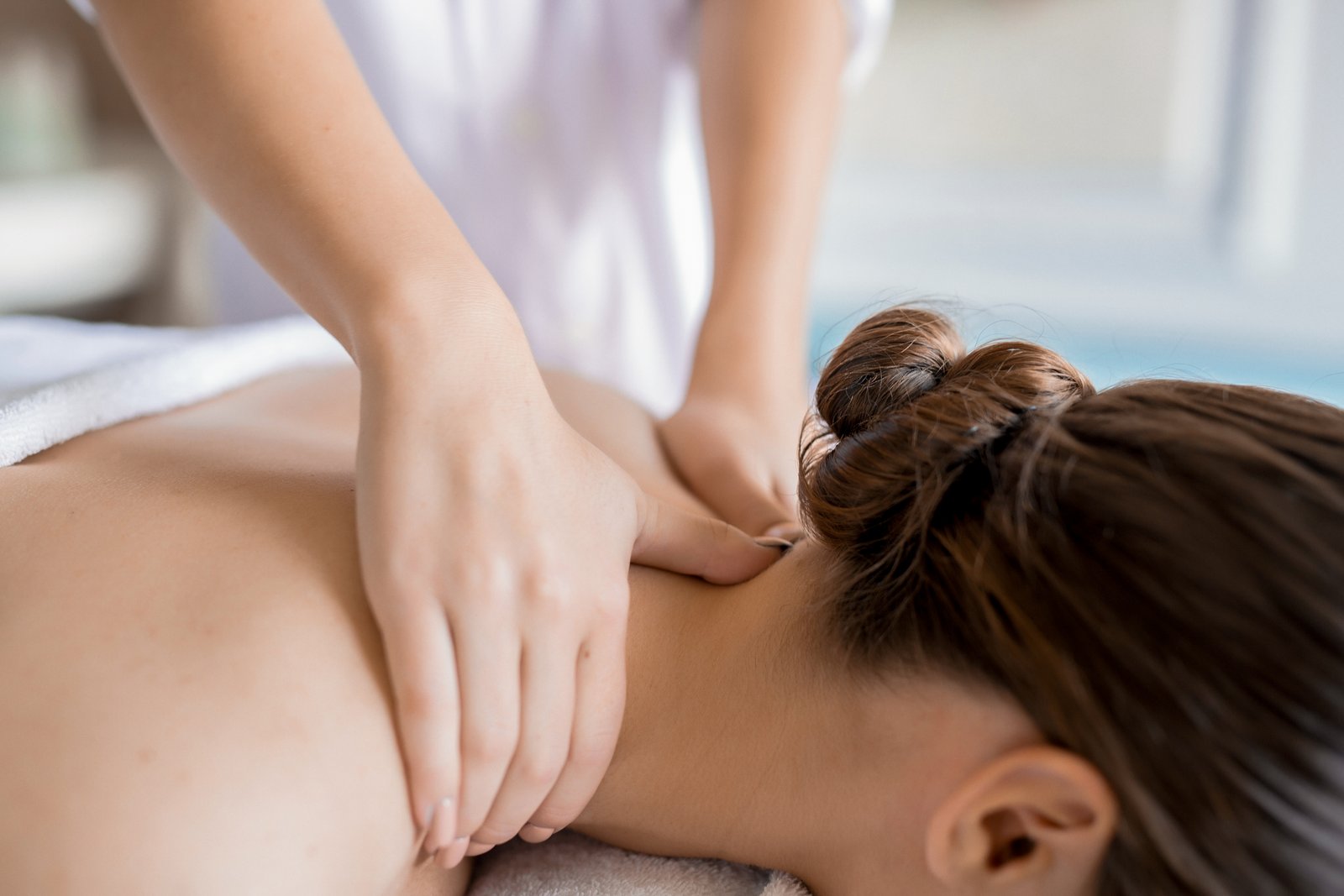
Neck and shoulder tightness can make everyday activities uncomfortable, whether you spend long hours at a desk, drive frequently, exercise regularly or carry tension during a busy week. You may notice stiffness when turning your head, a heavy feeling across your shoulders or discomfort after sitting in one position for too long.
Understanding what may contribute to this tightness can help you decide which steps to take, including whether a relaxing massage may be suitable.
There isn't always one single cause. Common contributors include:
1. Sitting at a Desk for Long Periods
Working at a computer for extended periods can mean holding your head and shoulders in one position for too long. An uncomfortable workstation and limited movement breaks may contribute to muscular tension.
2. Stress and Everyday Tension
When you feel stressed, you may unconsciously raise your shoulders, clench your jaw or tighten the muscles around your neck. Over time, this can contribute to a feeling of tightness.
3. Repetitive Activities
Driving , using a phone , working with your hands or repeating the same movements throughout the day can place repeated demands on the neck and shoulder muscle.
4. Exercise and Physical Activity
Some people notice tightness after strength training, sports or activities that involve the upper body. Exercise technique, training intensity and recovery time can all influence how your muscles feel.
5. Limited Movement
Remaining in one position for too long may leave you feeling stiff. Gentle movement and regular breaks can help you avoid staying in the same posture throughout the day.
Massage may help some people feel more relaxed and temporarily ease muscular tension. The experience depends on the source of the discomfort, the pressure used and individual preferences.
Massage is not a guaranteed solution for persistent neck or shoulder pain, and it cannot correct every underlying cause. If your symptoms are severe, ongoing or unexplained, seek advice from a qualified healthcare professional before booking a treatment.
Different massage styles offer different experiences. The most suitable option depends on whether you prefer gentle relaxation or more focused pressure.
Swedish massage uses flowing techniques and typically gentle to moderate pressure. It may suit people who want to unwind after a long working day and enjoy a relaxing full-body treatment.
Knots Away Massage can be an option for people who prefer attention on areas that feel tight, such as the shoulders and upper back. Pressure can be adjusted to suit individual comfort.
Deep tissue massage uses firmer, more targeted techniques. Some people prefer this style when they want focused work on areas of muscular tension, but stronger pressure is not always better. It may not be appropriate for every type of pain or injury.
Tell your therapist about any discomfort, sensitivities or health concerns before the session. Pressure should remain within your comfort level.
A massage can be one part of a broader self-care routine. You can also try:
Avoid forcing stretches or continuing movements that increase your pain.
Neck and shoulder discomfort can sometimes have causes that require medical assessment. Seek urgent medical attention if pain follows a significant injury or occurs with chest pain, breathing difficulty, new weakness, numbness or other concerning symptoms.
If the tightness persists, keeps returning or affects your daily activities, arrange an assessment rather than relying on massage alone.
If you are looking for time to relax and would like a massage focused on your comfort and preferences, Bliss offers massage treatments in Beaconsfield and Gerrards Cross.
Explore our Knots Away Massage in Beaconsfield, Knots Away Massage in Gerrards Cross or Deep Tissue Massage in Beaconsfield to learn more about the available options.
Choose a treatment based on your preferences, discuss any areas of concern beforehand and remember that persistent or unexplained pain should be assessed by a healthcare professional.
Can sitting at a desk cause neck and shoulder tightness?
Sitting in one position for long periods may contribute to muscular tension, particularly when your workstation encourages an uncomfortable posture. Regular movement breaks may help.
Is deep tissue massage better for tight shoulders?
Not necessarily. Firmer pressure is not always more effective or suitable. A gentler massage may be preferable depending on your comfort, symptoms and the cause of the tightness.
How often should I get a massage for shoulder tension?
There is no single schedule that suits everyone. Frequency depends on your preferences, response to massage and the reason for your discomfort. Persistent symptoms should be assessed professionally.
Should I get a massage if my neck hurts?
If the pain is new, severe, unexplained or associated with other symptoms, seek medical advice first. Massage may be unsuitable for some underlying conditions.
